张维迎:如果天黑就出发,越走天越亮,谁都会有信心(转载)-en
While scrolling saved posts on WeChat I found this piece; the original account had already taken it down, so I located the text and mirror it here for my own study only.
First published on the WSJ Chinese official account.
For a long stretch Zhang Weiying felt lonely. The intellectual tide shifted violently; for decades few echoed the ideas he held—but he didn’t waver, only regretted it. In recent years he quietly noticed younger people drifting toward his views: “That makes me really happy.”
It’s been thirteen years since he stepped down as dean of Peking University’s Guanghua School of Management, and the controversies around him have thinned. That gives him more time to sort his thinking—and to revise and push his earlier arguments further.
“Entrepreneurship” and “the market economy” are the keys to reading Zhang. Today he thinks markets rarely mint mega-fortunes; they mostly give ordinary people a shot at a decent life—which is already precious.
He increasingly believes the real point of a market economy is to channel the most creative, most ambitious people so they “can only do good for humanity, not harm.” He stands opposite the foundational homo economicus of economics: “I’m disappointed in human nature,” he says; the market, to him, is a mechanism that constrains it. “If we can’t govern ourselves, let the market economy do it.”
Under market logic the right people should land in the right seats—and entrepreneurs play the central part. “We’ve achieved a lot; everyone sees it came from reform and opening, and entrepreneurs mattered,” Zhang says. From new digital sectors, the internet, e-commerce, to manufacturing, private firms earned it: “We export so many low-cost goods—that’s entrepreneurs’ work.”
To Zhang the market is like air: unnoticed until it’s gone, then you realize you can’t live without it.
He was born in a mountain valley—Xinzhuang Village, Wubu County, Shaanxi. He never felt embarrassed; if anything it’s wealth. A farmer’s son, his references are Ordinary World or the household-responsibility reform. “Ordinary World is our region; the story sits close to my hometown.”
He cites a scene: in Shuangshui Village, Secretary Tian Futang’s job was ringing the bell for work. One morning the fields stayed silent—only the bell echoed. People had already gone out on their own. After decollectivization, peasants kept more of what they earned; motivation jumped.
Zhang uses it to show how institutions and incentives move the economy. “Without the household contract, no amount of bell-ringing would stir real initiative.” Many believe demand can be printed, confidence manufactured, growth stimulated. To Zhang development is organic: “If you set out while it’s still dark, the sky keeps brightening—everyone gains confidence.”
Among economists Zhang is unusual: he speaks to the public and keeps researching—both matter; he won’t drop either. Recent books Rethinking Entrepreneurship and Looking Back collect fresh thoughts on the former; the latter, in fluent prose, remembers parents, teachers, childhood friends—emotion on the page.
Like his writing, conversation doesn’t feel like “famous economist”—no airs, smiling, soft-spoken. On video he showed up on time in a down vest. Years in Beijing haven’t erased his northwest accent.
He last surfaced unexpectedly for a piece on Xintianyou—mourning his mentor He Liancheng. Under COVID travel limits he couldn’t attend the funeral and wrote “Teacher He, hear my Xintianyou once more,” with lyrics attached:
“The first time you stroked my head gently; the last time you smiled and stayed silent. You rejoiced for me and worried for me; you once praised how I sang Xintianyou.”
Before the 1977 college entrance exam resumed, Zhang returned to the village after high school—as Communist Youth League secretary and deputy militia instructor—without knowing arts vs. science tracks. He entered the new political-economy program at Northwest University; He Liancheng led it, enrolling fifty that first year—that extra quota became Zhang’s bridge to college and a new life. The whole village saw him off; the family treated neighbors to millet cake stew.
“Without Teacher He pushing expansion, I might never have gone to college.” Zhang remembers the debt even though the quota wasn’t aimed at him personally. Under He, Northwest created a new economics major—fifty lives rerouted.
Even after joining Peking University he visited He when he could. “He laid my foundations.” He graduated in 1951 and spent decades at Northwest; only after 1977 did he mentor cohorts he treated like children.
As Guanghua dean, Zhang’s reforms met resistance; He wrote PKU’s president—without knowing him—because they shared Hunan roots, trying once more for his student.
When He passed, Zhang drafted lyrics and asked fellow northwestern singer Ding Wenjun to set and sing them. Ding sent a demo, offered a studio version, stitched images into a video posted on a junior’s account—and it blew up. People thought Zhang sang; he denied it: the credits list the singer, “but nobody reads to the end.”
Looking Back isn’t “writing projects,” he says—it’s people he owes or can’t forget, “things that had to come out; my head couldn’t hold them.”
He’s stubborn, somewhat a loner among scholars—no cliques, no patrons, only what he believes. Even with He’s influence he never founded a “school”; he dislikes that. He cares less what others think now—only whether he can face himself.
Past sixty, around fifty he felt he “heard heaven’s mandate,” understood what decades had been for and what should come next—a clear accounting to himself. He’s been trying to shift public opinion, much of it before he framed it consciously. “At least don’t pretend.” With nothing left to prove, posture matters less.
In that sense Zhang is freer.
Below is our conversation with him:
WSJ: “Rational man” underpins classical economics. How do you view the rational-agent assumption?
Zhang Weiying: Rationality has many flavors—not one. Horizon matters too: a thief is “rational”; so is an entrepreneur—utterly different. I don’t judge individuals; I ask why they choose what they choose.
Graduates from places like PKU and Tsinghua heading into business—that’s a country’s luck. If they all scramble into the bureaucracy, that’s misfortune.
When the economy is alive and more people want to create and start companies, opportunity abounds. The next few years worry me for graduates. As dean I watched placements closely—if someone had multiple offers and could choose, I was glad.
Now I hear two people might share zero offers—that scares me. Jobs multiply when entrepreneurial people can start freely. Markets widen choice; moods lift. Too many constraints sour mood; sour mood kills creativity. Creativity peaks when people feel free.
WSJ: Has China entered a “dividing the pie” phase? Is the pie big enough?
Zhang Weiying: Economically, no country truly ends in a fixed-pie stage. I don’t believe in a pure “slice the pie” era. If society keeps growing the pie, baking is slicing—unfair slicing stops growth; fair-enough slicing lets it rise.
We all gained from reform; the task is removing unfairness—win contracts by ability and effort, not guanxi. Guanxi contracts skew the split. Fix that—not envy someone’s slice today and kill tomorrow’s pie. Wealth shifts; towers that look huge may be worthless in three years. See Detroit—properties nobody wants. Wealth isn’t mass or area; it’s what markets can do with an asset. Idle assets aren’t wealth.
If someone “gifts” you a 747 but forbids flight or restaurants, is that asset plus or minus? Obviously minus—decay and maintenance devour you. Wealth moves; only value creation counts.
WSJ: Post-COVID expectations for China’s economy—inevitable down leg?
Zhang Weiying: After decades of high growth, speed must fall. At today’s scale, holding ~3% steady would be impressive. Old models rode proven tech without R&D—easy fast growth. Near the innovation frontier, slowing is natural—not shameful; excellence slows too.
The real question is whether the new speed holds. Three percent is possible but hard; slip to negative is possible—Argentina was “developed”; Brazil, Venezuela too.
WSJ: “Stimulus” is treated as a cure-all for stagnation. What’s wrong with that mindset?
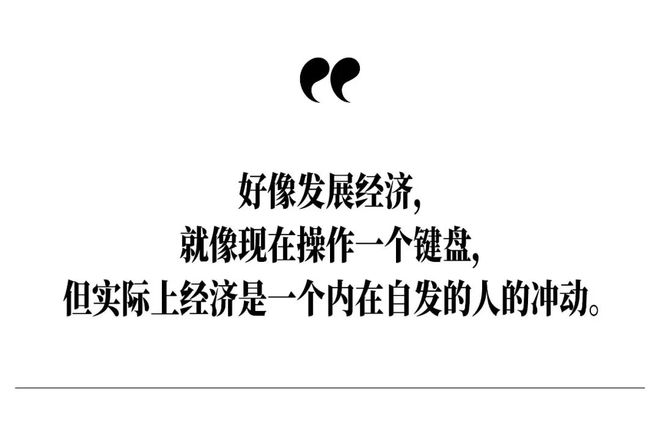
Zhang Weiying: How do you “stimulate”? Growth needs inner drive—rate cuts, subsidies don’t fix the core: impulse. Growth rides on entrepreneurs, not printing money.
Some theories look elegant but cage thinking—worse damage. Many believe economies are “manageable”—twist knobs like a keyboard. Economies are spontaneous human drive.
WSJ: How should we understand the market economy’s role in a healthy society? Beyond resource allocation—does that framing need updating?
Zhang Weiying: I’m not optimistic about human nature, so I want institutions that curb our worse sides and force correction. My view of markets may differ from others—and from my younger self. We used to say “resource allocation”; I think that’s wrong. Markets mean the most creative, ambitious people can only do good—if Musk harms customers or investors, he’s done. Mars trips that kill passengers end demand. We can’t trust ourselves; markets are the harness.
WSJ: You’re off the usual academic track—you invest heavily in public voice. Why?
Zhang Weiying: Mature fields splinter into technical silos—not all of it interests the public. Tastes and training differ; that’s fine.
Serious work deserves respect—even hyper-quant colleagues. Not every scholar must deliver instant social impact.
But be honest: say what you believe, not what flatters. Responsibility is “this is what I think,” full stop.
Intellectuals tempted to force agreement when ignored—debate ideas, don’t deploy power. Coercion betrays liberal economics. Persuasion only; if others won’t listen, that’s that.
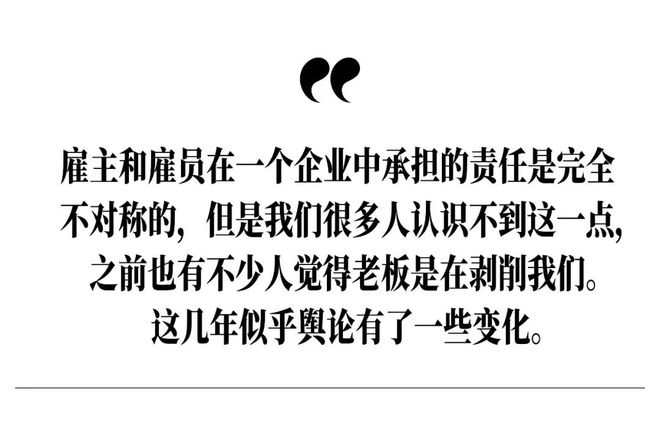
WSJ: Critique of capital seems to ebb; under global slowdown some even call 996 a “blessing.” How do you read that shift?
Zhang Weiying: I keep saying bosses often suffer more than staff—longer hours.
In one interview a founder sold his factory but stayed to run it. Asked how life changed: “Before, month-end meant scrambling to make payroll; now month-end I’m happy—I collect pay.”
Employers and employees bear asymmetric risk, yet many still think bosses exploit them. Lately firms fail and workers lose jobs; suddenly people hope bosses don’t quit—when the boss walks, meals stop.
WSJ: “Confidence matters more than gold.” Economies feel down worldwide—what do expectations mean now? How restore confidence?
Zhang Weiying: People fear distant horizons more than nearby obstacles. Walk 100 li starting 5 p.m.—each step darkens the path; fear grows. Start 5 a.m. in darkness and light returns—no fear. Afternoon walkers lose faith; morning walkers gain it. People watch the long road, not only today’s potholes.
At the micro level, confidence needs agency—“my fate is mine.” I chose; I bear consequences—that breeds confidence.
Take gaokao: you may miss a top school but you don’t blame a hidden hand—that’s self-ownership. If placement were arbitrary or by lottery, effort would feel pointless.
Confidence is the feeling you can steer outcomes. Societies must let people believe effort shifts odds. If not, why try?
Entrepreneurs are risk-takers; none guarantees profit—only belief they can. If success correlates with effort, they grind.
Agency means accepting failure you earned—and trying again. If outcomes feel rigged, people quit after one loss.
WSJ: From PKU and Guanghua—an elite cradle—you still radiate “bottom-up” concern many scholars lack. How do you hold both?
Zhang Weiying: People differ; I didn’t set out to perform compassion. I’m plain—I am what I am. Growing up, everyone you meet leaves traces; parents matter most.
I wasn’t ashamed of the village; I’m grateful after everything I’ve seen. What I write is sincere—your history is part of you; cherish it.
Stay authentic—others see through pretense. I didn’t engineer “humanistic care”; it’s just who I am.
WSJ: Young people face rent, jobs, stalled mobility; even PKU can feel unreachable—“hard for poor families to raise top students” looks real. Your read?
Zhang Weiying: First, decades of opening created huge mobility.
Second, stratification worries me—if it hardens, we should care. Personally I’m not that pessimistic.
In a 2021 elective with ~300 students (including Tsinghua and Renmin), I polled: over 90% urban, under 10% rural—sounds dire. But when I asked parents’ origins, over 80% grew up rural. I wrote “Where do PKU students come from? Two hops from the farm”—first hop parents to cities, second hop kids to PKU. Mobility stayed large; rural kids still face weaker schools, but urbanized parents push the next generation—hence elite admissions.
The survey is suggestive; we still can’t ignore inequality.
Gaokao is flawed but remains among the fairest institutions. I knew I couldn’t test into PKU—yet I taught there later. Fine by me.
Famous entrepreneurs often rose from nothing—Ma Huateng, Jack Ma came from ordinary backgrounds; many rich lists started as farmers without college.
That’s why I defend markets: real markets enable vertical mobility through creativity and entrepreneurship. Schumpeter’s image—a luxury hotel always full, but names on the door keep changing—is a health test for society.
I’m not hopeless; that’s why I cherish market-oriented reform—ordinary people can rise; without markets they can’t.
WSJ: Is “entrepreneurship” imported? Does China have its own entrepreneurial DNA?
Zhang Weiying: Some people are never content—they want to do what others won’t or can’t; they take risks and face failure. That type always existed. Humanity left Africa because some were wired to wander.
Usually we mean business entrepreneurship—commerce is hard and selective. Chinese tradition, though, “filed down” those people through the imperial exam—every incentive pointed to officialdom, so talent crowded government.
For society that’s a loss: government allocates wealth; business creates it. True entrepreneurs belong in firms—that’s a key ancient China vs. modern West contrast.
England had dissenters barred from the establishment who still chased commerce—more creative industry.
China’s huge shift after reform: excellent people went into business—but the culture remains fragile.
Since the 1980s I’ve wanted to change how the public sees commerce, entrepreneurs, and “modern ideas”—my “ten big shifts.”
As Guanghua dean few students chased civil service exams; now they scramble. Better brilliant people create wealth than allocate it.